Children's Dental Care: 7 Essential Ways to Protect Your Child's Smile

A healthy smile during childhood is about much more than appearance. Good oral health helps children eat comfortably, develop speech, maintain confidence and establish habits that support lifelong dental health.
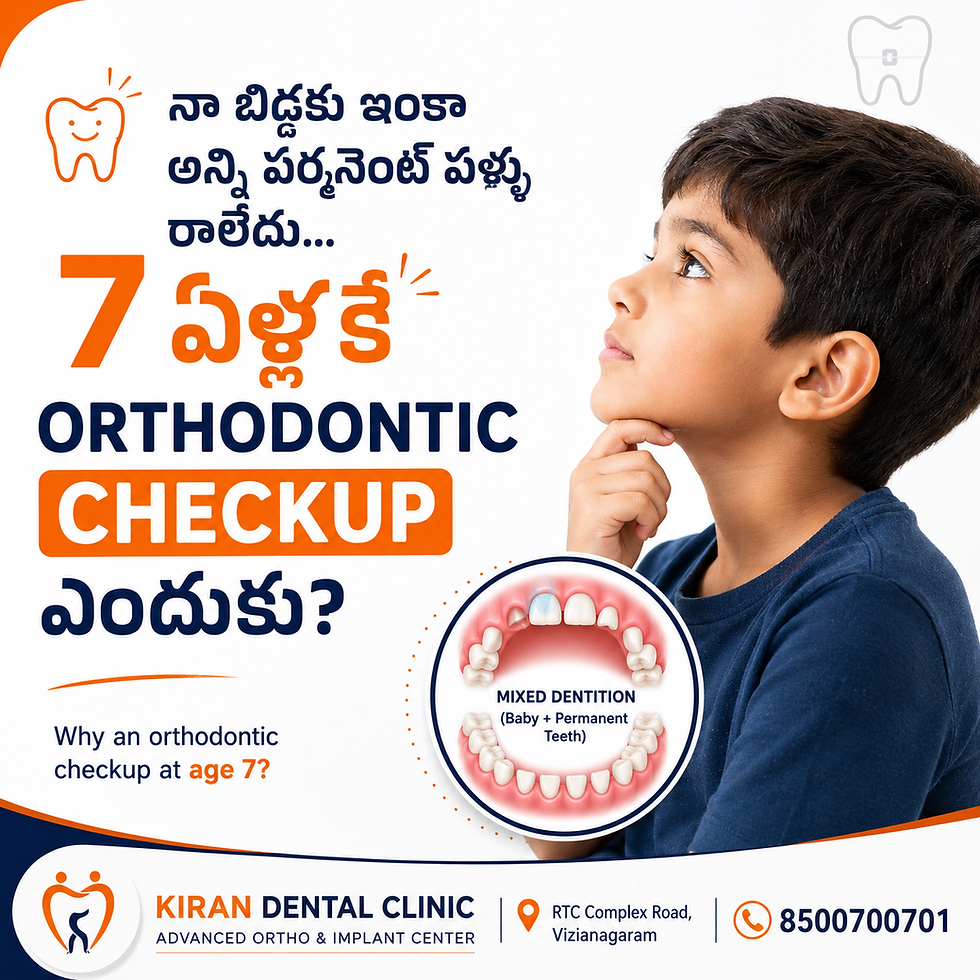
Many parents believe that baby teeth do not require much attention because they eventually fall out. This is a misconception. Babyteeth are important for chewing, speech development and maintaining space for permanent teeth.
On Children's Day, let's understand how parents can protect their children's smiles.
1. Why are baby teeth important?
Baby teeth, also called primary teeth, perform several important functions:
- Help children bite and chew food.
- Support normal speech development.
- Maintain space for developing permanent teeth.
- Support the development of a healthy smile.
Untreated decay in baby teeth can cause pain, infection, difficulty eating and premature tooth loss.
2. When should a child first visit a dentist?
The first dental visit should take place by the child's first birthday or within six months after the first tooth appears.
Early dental visits help identify potential problems, assess oral hygiene practices and guide parents on preventive care.
Do not wait until your child develops a toothache.
3. How often should children brush their teeth?
Children should brush twice daily, especially before bedtime.
Use fluoride toothpaste in age-appropriate quantities:
- Under 3 years: A smear approximately the size of a grain of rice.
- Ages 3–6 years: A pea-sized amount.
Parents should supervise brushing and help children clean their teeth effectively until they develop adequate brushing skills.
4. Can children develop cavities in baby teeth?
Yes. Dental caries is one of the most common childhood health problems.
Frequent exposure to sugary foods and drinks, inadequate brushing and prolonged exposure to fermentable carbohydrates can increase the risk of tooth decay.
Watch for:
- White or brown spots on teeth.
- Visible cavities.
- Sensitivity or toothache.
- Pain while eating.
- Swelling around a tooth.
Early evaluation can prevent minor problems from progressing.
5. What foods help support children's oral health?
A balanced diet supports healthy teeth and gums.
Include:
- Milk, curd and paneer.
- Fresh vegetables.
- Whole fruits rather than frequent fruit juices.
- Pulses and other protein-rich foods.
- Adequate water.
Limit frequent sugary snacks, sticky sweets and sweetened beverages.
6. Why should parents not ignore dental problems?
Untreated cavities can progress to pain, infection and difficulty eating. Dental problems can also interfere with a child's comfort and daily activities.
A child's complaint of toothache should never be dismissed simply because the affected tooth is temporary.
7. How can parents build lifelong dental habits?
Make brushing a consistent family routine.
Allow children to choose a toothbrush they enjoy, demonstrate proper brushing and make dental visits a normal part of healthcare rather than something associated with fear or punishment.
Consistency matters more than occasional intensive care.
Frequently Asked Questions About Children's Dental Care
Q1. At what age should a child visit a dentist for the first time?
By the first birthday or within six months of the first tooth erupting.
Q2. Do baby teeth need fillings?
Yes. Depending on the extent of decay, treatment may include preventive measures, restorations, pulp therapy or extraction. The appropriate option requires clinical evaluation.
Q3. Should children use fluoride toothpaste?
Yes. Age-appropriate fluoride toothpaste helps prevent tooth decay. Parents should supervise brushing and use the recommended quantity.
Q4. How many times should children brush daily?
Twice daily, for approximately two minutes each time.
Q5. Can cavities in baby teeth affect permanent teeth?
Untreated infection in primary teeth can sometimes affect the developing permanent tooth. Premature loss of baby teeth may also cause space-related problems.
Q6. Are dental visits necessary if a child has no pain?
Yes. Preventive visits can identify early decay and other problems before symptoms develop.
Give Your Child a Healthy Start
Good oral health begins with small daily habits, parental guidance and timely professional care.
At KiranDentalClinic – Advanced Ortho & Implant Center, Vizianagaram, we encourage parents to prioritise preventive dentalcareforchildren.
Happy Children's Day!
📍 Vizianagaram
📞 8500700701
Educational information only. Individual dental treatment recommendations require clinical examination.


Comments