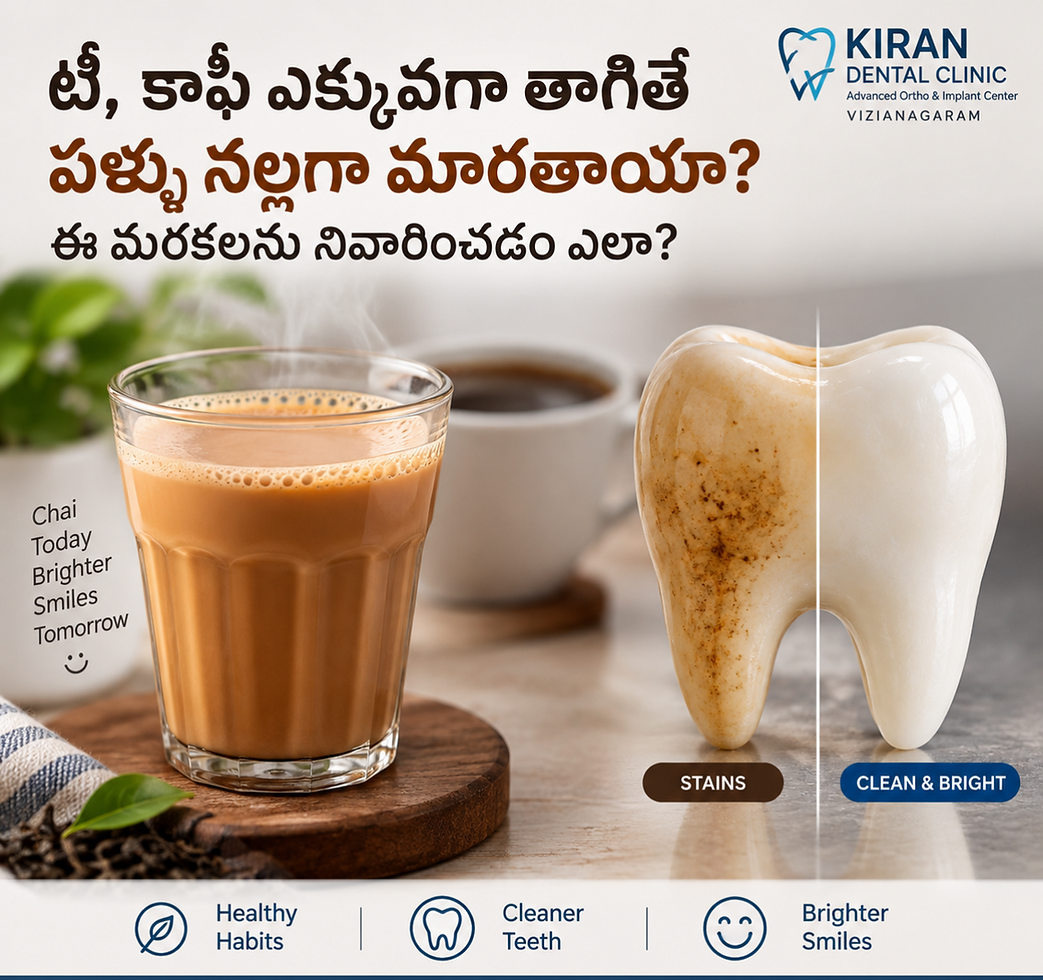
Tea & Coffee Stains on Teeth: Why Chai Turns Teeth Yellow and How to Prevent Them

CAN TEA AND COFFEE MAKE YOUR TEETH YELLOW?
Yes. Regular tea and coffee consumption can contribute to extrinsic tooth staining. Pigmented compounds in these beverages can accumulate on the tooth surface and interact with the acquired pellicle and plaque. Rinsing with water and maintaining good oral hygiene may help reduce stain buildup. Professional cleaning or polishing can remove suitable surface stains, but deeper discoloration may require different treatment.
For many of us, tea and coffee are part of our daily routine.
A morning cup of chai, an afternoon coffee, or several cups during the day may seem harmless from a staining perspective. But over time, you may notice that your teeth look more yellow or develop brownish stains.
One common reason is extrinsic tooth staining.
Extrinsic stains develop on the outer surfaces of teeth. Tea, coffee, tobacco, and certain foods and beverages can contribute to this type of discoloration.
But does tea literally enter the enamel and turn your teeth dark?
Not exactly.
The staining process is more complex than simply saying that tea enters the "pores" of the enamel.
How Do Tea and Coffee Stain Teeth?
Tea and coffee contain pigmented compounds that can contribute to tooth discoloration. Tea also contains polyphenols and tannins, which are associated with its staining potential.
Your teeth are naturally covered by a thin protein-rich layer called the acquired pellicle.
Pigmented compounds from beverages can interact with this surface and become retained along with plaque and other deposits. With repeated exposure, the discoloration can become more visible.
Several factors can influence how much staining develops:
• Frequency of tea or coffee consumption
• Duration of exposure
• Oral hygiene habits
• Plaque accumulation
• Calculus or tartar
• Tobacco use
• Natural tooth characteristics
• Existing enamel irregularities
So, drinking tea or coffee does not automatically mean your teeth will become dark. The amount of visible staining varies from person to person.
Are Tea and Coffee Stains Harmful?
A tooth stain is not the same thing as tooth decay.
Extrinsic staining is generally a cosmetic concern. However, the habits associated with tea and coffee can have implications for oral health.
For example, adding sugar frequently to tea or coffee can increase the risk of tooth decay. Poor plaque control can also contribute to gum inflammation and periodontal problems.
Tobacco use can make tooth discoloration more noticeable and is harmful to oral health.
Therefore, if you notice discoloration, it is important not to assume that it is simply a stain. A dental examination can help determine whether the problem is surface staining, calculus, decay, intrinsic discoloration, or another dental condition.
How Can You Prevent Tea and Coffee Stains?
You do not necessarily have to stop drinking tea or coffee to maintain a healthy smile.
Instead, focus on practical habits that reduce stain accumulation and support good oral hygiene.
1. Rinse Your Mouth With Plain Water
After drinking tea or coffee, rinse your mouth with plain water.
This can help remove some beverage residue and reduce prolonged contact with the tooth surface.
However, remember that rinsing does not guarantee that stains will never develop.
2. Brush Twice a Day
Brush your teeth twice daily using a fluoride toothpaste.
Good brushing helps control plaque and can help remove some surface stains.
Avoid aggressive brushing. Scrubbing harder does not mean your teeth will become cleaner or whiter.
3. Clean Between Your Teeth
Plaque can accumulate between teeth and along the gumline.
Use dental floss or another appropriate interdental cleaning method regularly to maintain good oral hygiene.
4. Avoid Continuous Sipping
If you sip tea or coffee continuously over several hours, your teeth are repeatedly exposed to the beverage.
Where practical, avoid carrying one cup of tea or coffee throughout the entire day and taking frequent small sips.
5. Limit Added Sugar
If you add sugar to your tea or coffee, reducing the amount can benefit your overall oral health.
Frequent exposure to added sugars can increase the risk of dental caries.
6. Avoid Tobacco
Smoking and tobacco use can contribute to tooth discoloration and significantly affect oral health.
Avoiding tobacco is an important part of maintaining healthy teeth and gums.
7. Maintain Regular Dental Check-Ups
Regular dental examinations allow your dentist to identify plaque, calculus, stains, gum problems, tooth decay, and other causes of discoloration.
Your dentist can also advise you on the appropriate cleaning interval based on your individual oral health.
Can Professional Polishing Remove Tea Stains?
Yes, professional polishing can help remove many suitable surface stains caused by tea, coffee, and other staining substances.
During polishing, dental professionals use appropriate polishing materials and instruments to remove or reduce surface discoloration.
However, polishing does not permanently change the natural colour of your teeth.
It is also important to understand that not every dark or yellow area is a surface stain.
What Is the Difference Between Cleaning, Polishing and Whitening?
SCALING
Scaling removes plaque and hardened calculus or tartar from the teeth.
POLISHING
Professional polishing helps remove suitable surface stains and deposits and can leave the tooth surface feeling smoother.
TEETH WHITENING
Whitening uses appropriate bleaching agents to lighten the colour of natural teeth.
These treatments are not interchangeable.
For example, someone with tea stains may benefit from professional cleaning and polishing. Someone with naturally darker teeth or intrinsic discoloration may require a different approach.
Can Whitening Toothpaste Remove Chai Stains?
Some whitening toothpastes can help remove certain surface stains.
However, they generally do not change the natural internal colour of your teeth.
If you have persistent discoloration despite good oral hygiene, a dental examination can help determine whether cleaning, polishing, whitening, or another treatment is appropriate.
Myths vs Facts About Tea and Coffee Stains
MYTH 1: "If I drink chai every day, my teeth will definitely turn black."
FACT:
Tea can contribute to extrinsic tooth staining, but the amount of discoloration varies between individuals. Drinking tea does not automatically mean that your teeth will become black.
MYTH 2: "Rinsing with water completely prevents stains."
FACT:
Rinsing with water after tea or coffee may help remove residue, but it cannot guarantee complete prevention of staining.
MYTH 3: "Professional polishing permanently whitens teeth."
FACT:
Polishing can remove suitable surface stains. It does not permanently change the natural colour of your teeth.
MYTH 4: "Yellow teeth always mean poor oral hygiene."
FACT:
Natural tooth colour varies between individuals. Age, enamel characteristics, dentine colour, intrinsic discoloration, and external stains can all influence how teeth look.
MYTH 5: "Scrubbing harder will remove tea stains faster."
FACT:
Aggressive brushing is not a safe or reliable way to remove stains. Gentle, effective brushing with fluoride toothpaste is preferable.
Frequently Asked Questions
Does milk tea stain teeth?
Yes, milk tea can still contribute to tooth staining. The extent of staining depends on the beverage, frequency of consumption, oral hygiene, and individual factors.
Is coffee worse than tea for staining?
Both tea and coffee can contribute to extrinsic tooth discoloration. The staining potential can vary depending on the composition of the beverage and individual exposure.
Should I rinse my mouth after drinking tea?
Yes. Rinsing with plain water after tea or coffee is a simple habit that can help clear beverage residue from the mouth. However, it does not completely prevent staining.
Can professional polishing remove all brown stains?
No. Professional polishing is mainly useful for suitable surface stains. Some discoloration may be intrinsic or associated with calculus, decay, restorations, enamel changes, or other dental conditions.
How often should I get professional polishing?
There is no single polishing schedule that is appropriate for everyone. Your dentist can recommend professional cleaning and polishing based on your plaque, calculus, staining, gum health, and individual needs.
Can tea stains be removed at home?
Mild surface stains may improve with good oral hygiene and appropriate toothpaste. Persistent or heavy staining may require professional dental cleaning or polishing.
Why is one tooth becoming dark?
A single dark tooth should not automatically be attributed to tea or coffee. Trauma, tooth decay, changes within the tooth, restorations, or other conditions can cause a tooth to become darker. A dentist should evaluate unexplained changes in the colour of a single tooth.
When Should You See a Dentist?
Consider a dental examination if you notice:
• Persistent brown or black stains
• A single tooth becoming noticeably darker
• Tooth pain or sensitivity
• Bleeding or swollen gums
• Hardened deposits near the gumline
• Discoloration that does not improve with routine oral hygiene
• A sudden change in tooth colour
The cause should be identified before choosing a treatment.
Conclusion
Tea and coffee can be enjoyed as part of a normal lifestyle, but regular exposure may contribute to surface staining.
Simple habits such as rinsing with water after drinking, brushing twice daily with fluoride toothpaste, cleaning between the teeth, limiting added sugar, and avoiding continuous sipping can support good oral hygiene and help reduce stain accumulation.
When visible stains persist, professional dental cleaning and appropriate polishing may help remove suitable surface discoloration.
However, cleaning and polishing are not the same as teeth whitening, and not every type of discoloration can be removed by polishing.
If you are concerned about yellow, brown, or dark stains on your teeth, the first step is to identify the cause.
Need Professional TeethCleaning or Polishing in Vizianagaramhttps://www.kirandentalvzm.com/teeth-cleaning-scaling-vizianagaram ?
At Kiran Dental Clinic – Advanced Ortho & Implant Center, Vizianagaram, our dental team can assess tooth discoloration, plaque, calculus, and gum health and recommend appropriate treatment based on your individual needs.
Dr. Priyanka Majji
MDS Periodontist(https://www.kirandentalvzm.com/gum-treatment-vizianagaram) & Implantologist
Dr. Kiran Vungarala
MDS Orthodontist
For appointments and enquiries:
📞 8500700701
Kiran Dental Clinic – Advanced Ortho & Implant Center
Vizianagaram
Important Note
This article is intended for general dental education and does not replace an individual clinical examination or professional dental advice.


Comments